 CloseEase Blog
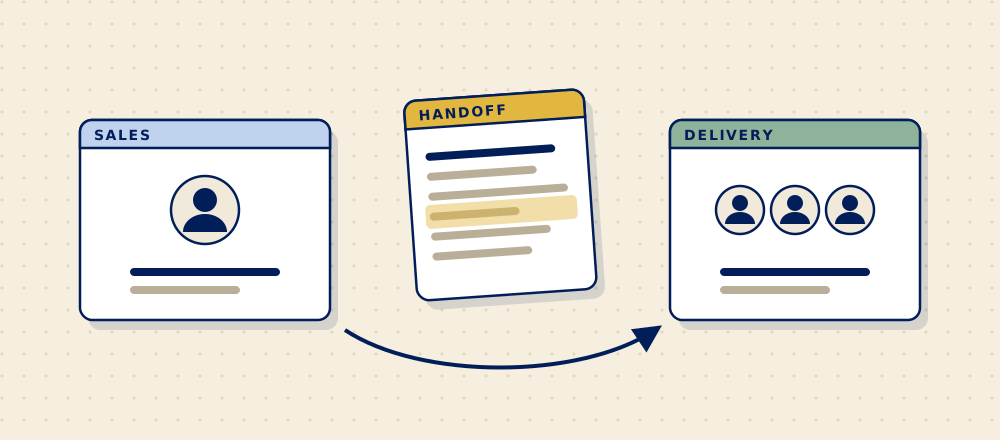
The person who sold the work knows things nobody else does: what the client is nervous about, the "we can probably also do that" from the second call, the name of the person who actually signs off. The handoff is where most of that goes missing. It doesn't have to.
Short answerTo hand a new client from sales to delivery without losing anything, have the seller write a one-page handoff note on the day the client signs, hold a short internal handoff meeting before the client meets the delivery team, and keep the seller involved until kickoff. The note matters most: it turns what lives in one person's head into something the whole team can read.
Why do sales-to-delivery handoffs lose things?
Because the important parts of a sale aren't in the contract. The proposal says what you'll deliver. It rarely says why the client bought now, what they were burned by last time, or which extra the seller half-promised to get the deal over the line. That context lives in someone's memory and inbox, and your CRM holds the deal amount and the close date, not the story.
Then the seller moves on to the next deal, and the people doing the work meet the client without it. Asana found that a quarter of knowledge workers miss deadlines every week, and that new hires spend nearly twice as much time on duplicated work as their colleagues.1 A delivery team starting cold on a new client is in much the same spot as a new hire: everything they need exists somewhere, just not where they are.
What should a sales-to-delivery handoff note include?
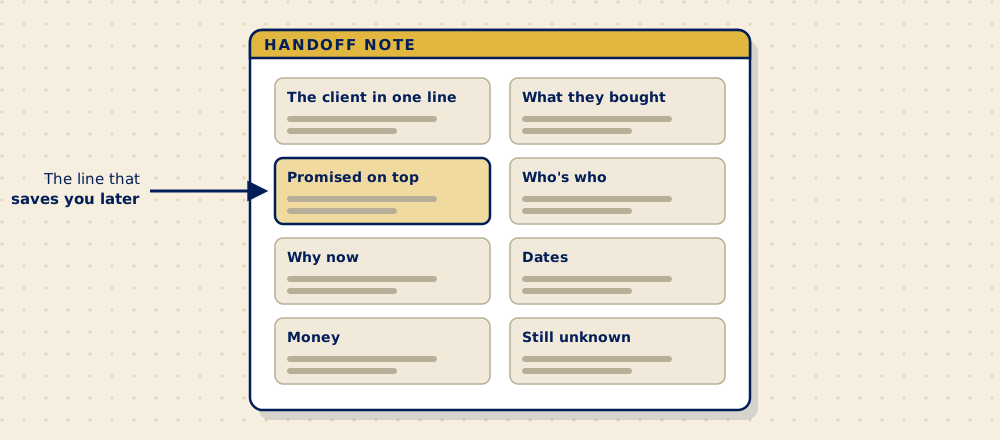
| Section | What goes in it |
|---|---|
| The client in one line | Who they are and what they need, in a sentence a new team member would understand |
| What they bought | The scope as signed, with a link to the proposal |
| Promised on top | Anything said in the sale that isn't in the scope, even "we'll see what we can do" |
| Who's who | The decision maker, the day-to-day contact, who approves, who pays |
| Why now | What made them buy this month, and what they're worried about |
| Dates | Start date, hard deadlines, holidays or busy seasons on their side |
| Money | Price, billing contact, purchase order or payment terms |
| Still unknown | What nobody has asked yet, so it goes in the client's first request |
Keep it to one page. A handoff note people don't read is just a longer way to lose things.
Do you need a handoff meeting as well?
Yes, a short one: 20 to 30 minutes, internal only, before anyone from delivery talks to the client. The seller walks through the note and the delivery lead asks the awkward questions in private ("did they really agree to that date?"), so they don't get asked in front of the client.
A simple agenda:
- The client in one line, and why they bought now.
- What was sold, and what was promised on top. Decide here which extras are in and which aren't.
- Who's who on their side.
- What's still unknown, and who asks for it.
- Who owns the client from now until kickoff.
When should the salesperson let go?
After kickoff, not at the signature. Until the work starts, the seller is the only person the client has talked to, and pulling them out the moment the contract is signed feels to the client like being handed to a stranger. Ownership moves to delivery straight away. The seller simply stays in the room until the client has met the people doing the work.
How do you stop promises from the sale turning into free work?
Write them down and decide on them before kickoff. Most scope creep that starts in the sale isn't the client being difficult. It's a "sure, we can probably do that" that nobody recorded, so it comes back as a surprise in month two. The "promised on top" line in the note makes every one of those visible while it's still cheap to say "that's a separate piece of work".
Can your CRM handle the handoff?
It can help a lot, if it's set up for it. When a deal is marked won, the CRM can open the handoff note with the required fields already in place, fill in what it already knows (contacts, value, dates), and tell the delivery owner it's their client now. What it can't do is write the "why now" and "promised on top" lines. Those still need the seller, which is exactly why the note exists.
If your handoff is where things get lost, our client onboarding page shows how we fix it, often with tools you already have. For the steps after the handoff, see what should happen between a client signing and the work starting.
Questions people ask
Who should write the handoff note?
The person who sold the work, on the day the client signs. They're the only one who knows what was said, and the details fade fast once they're on to the next deal.
What's the most important part of a handoff note?
The list of anything promised on top of the signed scope. It's the part most likely to be forgotten and the part that causes the most trouble later.
Should the client be in the handoff meeting?
No. The handoff meeting is internal, so your team can ask questions and sort out disagreements before the client meets the delivery team. The client joins at kickoff.
How long should a sales-to-delivery handoff take?
Writing the note takes about 20 minutes and the internal meeting 20 to 30 minutes. Both should happen within a day or two of the client signing.
Is a sales-to-delivery handoff the same as client onboarding?
It's the first part of it. The handoff moves what you learned in the sale to the delivery team. Onboarding then collects what you still need from the client and gets them ready to start.
Sources
- Asana, Anatomy of Work Index 2021. Survey of 13,123 knowledge workers in seven countries, October 2020. Asana sells work management software.